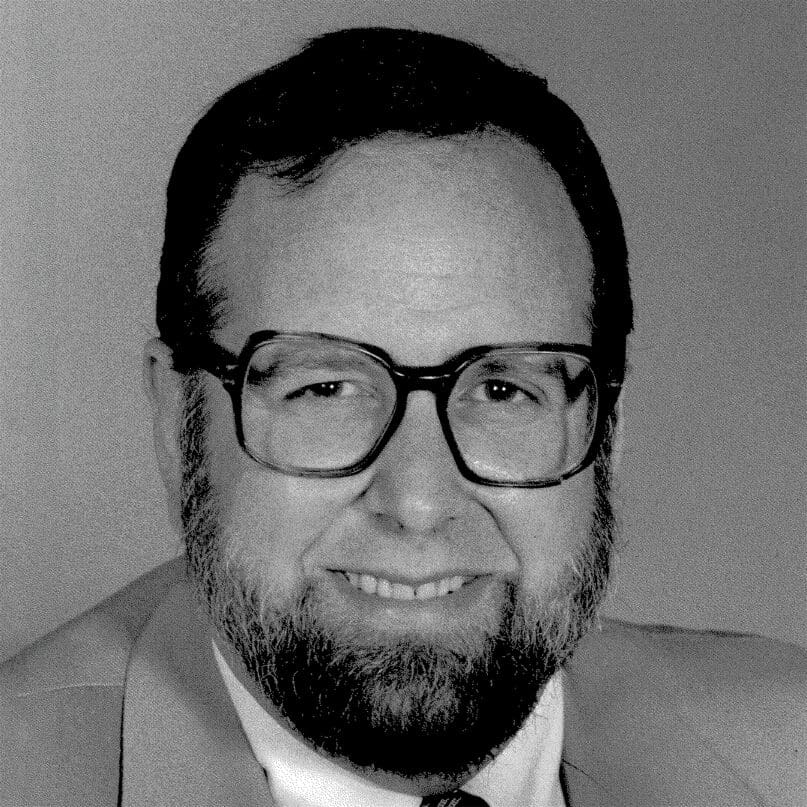
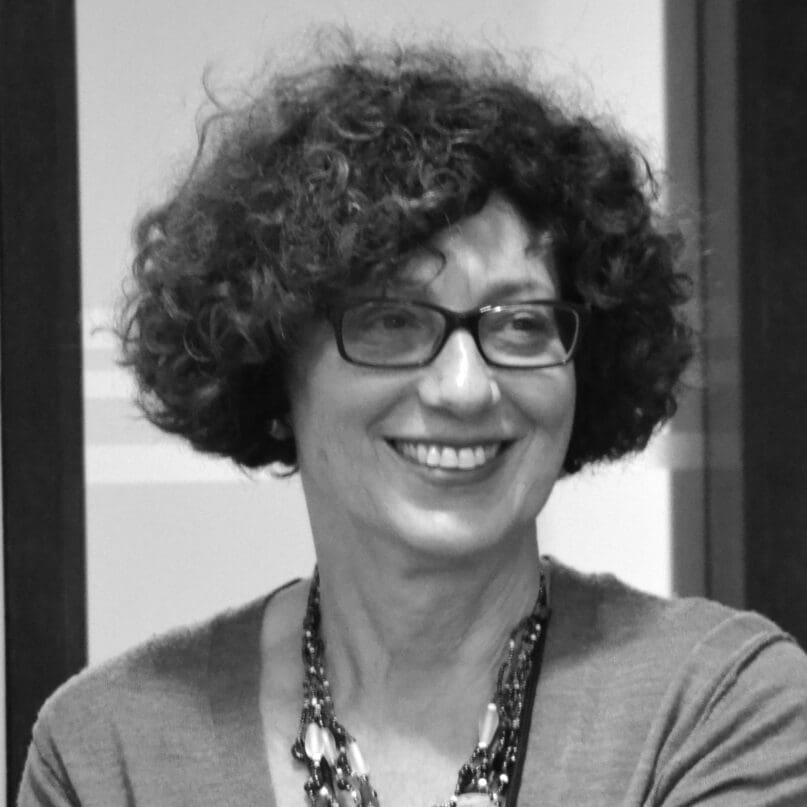
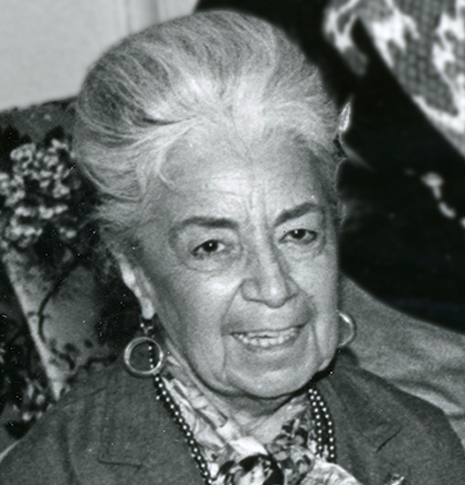
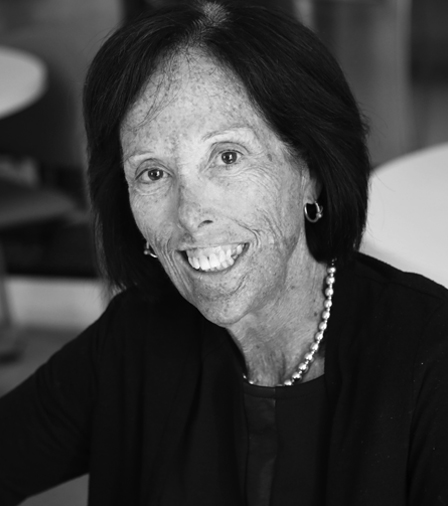
“Minna* once came into my office and said to me, ‘You owe us a lot.’ I said, ‘Minna, what do I owe you?’ And she said, ‘We made you a better person.’ ”
– Michael Goldfarb, recent interview. (* = Minna D. Bober, Esq., founding parent of AHRC)
“I never forget why I am here. Michael never forgets why he is here… You cannot permit something to look shabby, because there is a parent watching.”
– Judy DeIasi
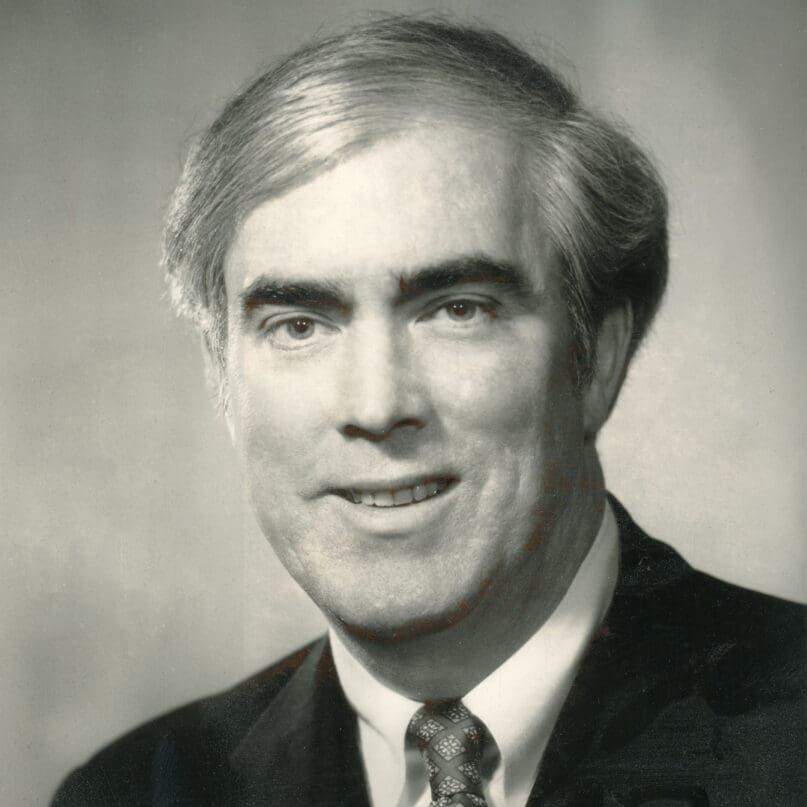
“The privilege of being involved with AHRC is that it is suffused with love.”
– Jim Murphy, AHRC President, 1974-77
Organization and Services
A visitor to AHRC’s main office on Union Square would find the following basic facts from its “General Information” brochure. Today AHRC is one of the largest consumer-based not-for-profits in the City with a membership of over twelve thousand. AHRC serves over seven thousand people with disabilities of all ages and levels of disabilities, and provides education and training, counseling, case management, referral and advocacy services to families. The agency employs over two thousand five hundred staff, at more than eighty-five service sites, with an operating budget of over ninety million dollars. It has tripled its operating budget since 1990.
Now in its fiftieth year, AHRC is organized into several Departments that are responsible for operating thematically grouped programs and services.
The Department of Family and Clinical Services functions as a gateway to all further service provisions in the agency, provides a wide array of clinics and also acts as a referral service to other social service agencies. Clinical services include group and individual counseling, developmental evaluation and testing services, medical services, habilitation services, service coordination (case management), legal and guardianship services, future care planning, the sibling network, and an alcohol and substance abuse clinic (this being the first of its type and licensed by the New York State Office of Alcohol and Substance Abuse Services). Also within the Department of Family and Clinical Services are two other innovative programs, the Francesca Nicosia Fund (Family Reimbursement Project) begun in 1991 and the In-Home Behavior Management Program. The Francesca Nicosia Fund allows parents to determine what resources they need to improve the quality of their life. The In-Home Behavior Management Program provides training to families trying to cope with destructive, aggressive and otherwise difficult behaviors of children in the home. The Department of Family and Clinical Services also runs the Bronx Early Childhood Direction Center, an information and referral service to parents of young children with disabilities.
The Department of Residential Services provides a variety of residential options to almost four hundred people with developmental disabilities in the five boroughs. These residential options include Intermediate Care Facilities, community residences, supported apartments and independent living arrangements (individual residential alternatives or IRAs). Additionally, in-home residential habilitation services are provided to families to help meet care giving responsibilities. Respite services are also provided to families who, for a variety of reasons, need “time off” from their caretaking responsibilities.
The Department of Camping and Recreational Services operates programs for over eight hundred people with mental retardation annually from ages five to eighty. These include camping, vacation and recreation services that are provided to over eight hundred people. The Department operates Camp Catskill, and Harriman Lodge, and a referral service to other camps. The Family Weekends in the Country Program, where families can spend a “get-a-way” weekend in the Catskills is also available. The Recreational Services Program offers a large variety of recreational programs in the five boroughs, including theater, photography, arts and crafts, sports and local travel.
AHRC operates Early Intervention, Early Childhood and Related Educational Services known also as the Blue Feather Early Learning Programs. AHRC began early intervention programs in 1976, with the opening of the Blue Feather Early Learning Center in Brooklyn. This was years prior to the passage of PL 99-457, the Federal Legislation of the late 1980’s, today known as “The Individuals With Disabilities Education Act (IDEA),” that makes early intervention and education an entitlement to children with handicapping conditions. These Federal provisions currently have to be implemented and monitored by each State (and the way this evolved in New York State could itself be a book). Early intervention services in New York City are monitored by the New York State Department of Health (ages birth through three), the State Department of Education (ages three to five), and, for programs for children three to five years old that are located in the City, by the City Board of Education. The Blue Feather Early Learning Centers provide a variety of services to children ages birth to five years old. These include six Center-Based Special Education Preschools (the Astoria Blue Feather Center, the Howard Haber Early Learning Center (Bronx), the Bronx Blue Feather Early Intervention Program, the Brooklyn Blue Feather Early Learning Center, the Jennie Knauff Children’s Center (Bronx, serving children who are medically fragile) and the Esther Ashkenas Center (Manhattan). The Department also provides specialized Applied Behavior Analysis Programs for children ages three through twelve diagnosed with autism. Beyond this, the Department provides itinerant special education and related services to children ages three to five in mainstreamed programs, early intervention discrete services for children birth to three who do not require comprehensive programs or placement, and advocacy services to assist families in getting appropriate services for their children.
AHRC operates Adult Day Services ranging from programs that are geared to individuals who require high levels of supervision and training, to assisting individuals in competitive employment. AHRC currently serves more than seventeen hundred individuals throughout New York City in three day habilitation programs (a goals-oriented program involving recreation, education, culture, community exploration, voluntarism and work), three vocational workshops (wherein structured work environments are offered for those who need them), three day treatment centers (in which abilities of the individual to function more independently and in the community are fostered), as well as specialty programs and numerous competitive and supported employment settings. AHRC also operates an array of services specially tailored to the needs of people with Traumatic Brain Injury (TBI), TBI Community Support Services. The Seniors in Action program, in which individuals fifty and over participate in various activities, including senior programs with their non-disabled peers, is also administered by Adult Day Services. AHRC programs are funded by a complex mixture of federal, state, third party, private donations, and grants.
AHRC has become over time, in sociological terms, more of a gesellschaft, which evolved from the founders’ vision and their earlier smaller, family-like organization (gemeinschaft). For AHRC to be what it is today required a change in self-image as well as modus operandi.
This evolution was a central topic in the interviews with current administrators, Judy DeIasi, Michael Goldfarb, Bob Gundersen and Gerry Maurer.
Michael Goldfarb came to AHRC in 1975 after “answering a blind ad.” Goldfarb had come from a family in various ways involved in human services and medicine. His father was a psychiatrist of some repute who had actually done some studies of the impact of institutionalization on children. Goldfarb had rejected a career in philosophy, although he acknowledges its contribution to some of the skills required of his job. He had apprenticed at a mental health and child-care agency as an administrative assistant, and then served as a Director of a small mental health service, Brooklyn Psychiatric Centers. Jack Gorelick who was acting Executive Director at the time made it clear that he did not want the position, but preferred to run the AHRC Clinic. Goldfarb was hired as AHRC Executive Director in 1975 after an extensive search process. He has remained Executive Director for the past twenty-three years, substantially affecting the planning and growth of the organization, and helping to maintain AHRC’s position as the leading agency in its field.
This being said, it is important to recall the epigram to this chapter in which Minna Bober formulates for Goldfarb the effect AHRC had upon him as a person. Goldfarb’s task was different from that of the founding parents. When he arrived, AHRC presented a strong organizational culture that defined him and the other administrators who have come to the agency.
“They changed the kind of person I am. And that is a really critical issue. Good Executive Directors of ARCs…have to be able to internalize the culture of the ARC. Basically, they changed me a lot…One of the first weeks I was here, Walter Redfield’s wife, who was then alive, and Betty Pendler, walked into my office and sat me down and told me what it was all about. They told me that this is a parent organization, driven by parent values, and that if I wanted to stay here I was going to have to learn that. And they sat me down and that is what they did…So, some of my contribution to this organization came from becoming the person they wanted me to be…The culture defines the people who work here as much as the people who work here define the culture.”
– Minna D. Bober, Esq., founding parent of AHRC
Thus, it is important to understand the dynamics of management in AHRC, especially the relationship to the Board and the organizational culture. Only then can one appreciate the how things worked when Goldfarb became Executive Director.
He recalls another early AHRC ‘right of passage,’
“…the first two years is the period when you are tested and tried…and the first two years were challenging. There were things that the Board wanted fixed and changed. And there were things the Board did not want to see touched. There was also a situation where the Board wanted to see things changed but didn’t understand the price that would have to be paid to experience those changes…Members of the Board, many of whose children and brothers and sisters were in the programs, had to feel comfortable with me as somebody who was comfortable with their children, brothers and sisters. And, in fact, one of the Board members said, ‘If my son comes over and hugs you, are you going to be comfortable?’ So that personal level of comfort with people with disabilities was a real test.”
– Michael Goldfarb, AHRC New York City’s Executive Director from 1975 to 2011
The presenting culture of the organization was and is most clearly expressed by the AHRC Board. Many other parent organizations founded in this era were until recently run by parent-dominated Boards. AHRC still is. When Goldfarb took over there was a very active Board.
“Yeah, run by parents and other family members…Very much similar to the Board we have now but with some differences…Very strong committee structures. The committees were very much involved in policy-making for the organization. Very much a functional and active Board.”
One of the strengths of the AHRC Board, sometimes lacking in other similar organizations, was its appreciation of the difference between governance and management. In the early days of AHRC, such a distinction was virtually impossible to make. As AHRC grew larger and the Board older, it became more comfortable with allowing agency management to run programs (the operating budget at this time was over $3,400,000 with over 200 full time employees. Direct management of operations by the Board would have already been impractical). Goldfarb recalls,
“It’s very clear to me that the Board knew, when I got here in ’75, the difference between a member of the Board and a Chief Executive Officer, and we were very comfortable with that division of responsibility. That was very useful and very helpful.”
But he also learned something else immediately about the Board and its policies.
“Protection… is the primary driving force in the organization. That sets us apart from other agencies because, although most of them were founded by consumers, very few of them have retained consumer Boards. Consequently, protection, though it is an important element of design in other agencies, doesn’t occupy the primary position that it does here.”
In many of the interviews I conducted we discussed the issue of AHRC’s current reputation as a somewhat conservative organization, a reputation that has changed over the past few years. Generally speaking the “protectionist” orientation characteristic of AHRC services and programs has been critiqued from the various ideological positions that have evolved since Goldfarb joined the agency. Generally speaking, the protectionist philosophy characteristic of AHRC’s programs came into conflict with various concepts formulated by academics. Goldfarb comments,
“I think you need a safety net. I think you need to recognize that the people we serve really have limitations, whether you want to call them that or not, whether it is politically correct or not to say. They really have limitations that disadvantage them in their environments, which are neither designed nor prepared to accept them. And one of the things that infuriates me about some academics in the field is their belief that we should destroy site-based programs and move on to “natural support.” I mean that is basically a reactionary fantasy. You don’t have to pay for anything…you just throw people out on their own…a Darwinian view I guess [clearly being sardonic now] I guess we hope they survive…” [end note 18]
Nobody on AHRC’s administrative staff felt at all embarrassed about the fact that AHRC took this position with respect to its policies. Indeed they were quite convinced of their position and proud of it. This can be seen in Judy DeIasi’s remarks. Judy was initially a Special Education Teacher who ended up working for the Office of Mental Retardation and Developmental Disabilities, eventually as Chief of Community Services in Queens. She had been a caseworker who placed clients from Willowbrook to community settings, and who had learned a lot about administration from her boss, Barbara Bloom. “Michael hired me,” Judy says, “because I gave him a hard time.” Closer to actual reality, as we shall see shortly, DeIasi fit into AHRC’s plan to build the management team needed to accommodate future growth. Goldfarb had brought Bob Gundersen into the agency in 1984 to help structure management to meet the needs of the multimillion-dollar agency AHRC had become. Gundersen came from a management, not program, background, while DeIasi was brought on to administer programs.
During our interview, she devoted considerable time to remarks about AHRC’s current viewpoint about inclusion.
“I’m worried about so many of our people who have limited judgment. There are many issues coming out of the community…so much good has happened. And then there are issues that are really problematic. A new issue for me…this month…is credit cards. We’ve got two people with over $40,000 in credit card bills… And I was talking with somebody in Albany who hasn’t run anything in twenty years…he does program planning…and he said, ‘Isn’t that great Judy?’ You know like isn’t it great that the problem they have is like everyone else’s? And I don’t have that reaction…They don’t understand how they are going to pay $40,000 in credit card debt with a $7,000 salary. There are real issues.”
DeIasi continues,
“There are real prices to be paid… I think bringing people up with the expectations of full inclusion sometimes hits you in the face once they are out of school. When I look at a group home of ours…like 81st Street…they’ve been together. They’re a family. There is love and trust there. In contrast, I know someone whose mom was one of those fighters for inclusion. She made sure he got into an integrated high school. And he has got nothing to do now. He doesn’t see himself in any special program, and he doesn’t understand why the blond sitting next to him in the college course he is taking…won’t go out with him. So he goes out every Saturday night with his parents to the movies…he doesn’t belong anywhere other than tagging along with his mom and dad…and I guess he’ll tag along in the future with his sister. He’ll be the uncle who lives with his sister…you know? But there is a real price compared to the folks at 81st street.”
DeIasi and Goldfarb echo the sentiments of the AHRC Board. The preference is protecting persons with mental retardation. This is AHRC’s way. While the organization reflects some of the changes in the field such as the “right to choose,” at the heart of the AHRC philosophy is the parental urge to protect an offspring who cannot adequately do so him or herself. The administration has to internalize the values behind this urge, and utilize them in the day to day running of the agency. [end note 19]
Goldfarb related an anecdote about Jerry Weingold that went like this.
“They felt guardianship [as had been written into law by Weingold and others] was intruding into the lives of people with disabilities, preventing them from living independently. There was a lot of chatter about ‘dignity of risk.’ And Jerry Weingold’s response was, ‘Does that mean you want to give people with mental retardation the right not only to climb to the top of the ladder but to fall off as well?’ And to some extent that is how we view it.”
The Board has supported the growth of AHRC over the past twenty-five years. Expansion was not undertaken for the same reasons as private business, in which survival may depend on the size of one’s operation. Nor was it to be the biggest fish in the pond. Goldfarb comments regarding the growth in size of the agency,
“…my feeling was always that unless we got a lot bigger, we could really not do what we intended to do anyway…and that we couldn’t protect [certain programs]. We have a lot of services that nobody wants to pay for. These services can survive in an agency that’s large, but could not survive in a smaller agency…Services like guardianship and advocacy that nobody would pay for. The only way we are able to do this is to be large enough and efficient enough to be able to either generate revenues within the program that are generally applicable to some of these new services…, or to run the operation efficiently enough to loosen up some funds that might otherwise have been spent on some program…We operate an agency in the black so that we serve people better and operate programs that would otherwise be in the red.”
These are the real motives in the expansion of AHRC, providing an array of services that are thought to be necessary for the quality of life of residents and program participants. DeIasi said,
“That’s the way this agency functions. There is never a question if a person with a disability needs something…if a person needs something, we’ll do it. You never think twice about a client issue, ever.”
The expansion and diversification of services that makes it possible to provide the needed array of services, requires both a reconceptualization of the organization in terms of its self-image and management capacities. Thus in the late 1970’s management purposefully set out to change the way AHRC operated, including its self-image.
Goldfarb describes what he was attempting to do,
“We made a decision… about fifteen years ago. I went to a presentation by Lou Brown, whom I had never heard at that point. And by the time he finished I knew that it was time for us to begin to look in some new directions. And so I brought him here and he talked to our staff and our Board. I brought my staff and Board together and we changed a lot of attitudes. But what we try to do is to incorporate some of the newer approaches into what we do, and to retain some of the older approaches that we think make sense. So we have struck a kind of middle ground on this stuff…we’ve taken the lessons from newer revenue streams that are tied to more progressive ideologies, and imported them into traditionally funded services.”
The change in AHRC’s self-image from a small, family-like, “conservative,” organization to a larger and more progressive one was something that was managed in a self-conscious way as soon as the issues had been conceptualized.
“I realized we were so traditional…so conservative and hide-bound that we were missing all these opportunities to do programs and exciting things, and a future that was colorful, interesting and growing. So we basically began to modify our strategic plan to bring in some newer kinds of programming, to convert some of our existing kinds of programs, and to reflect it all in a newsletter because it seemed to me that people would view us through the lens of our newsletter.”
The newsletter is The Chronicle, regarded by many as the best newsletter produced by any mental retardation agency. (Several of my interviewees from outside the agency remarked about the quality of The Chronicle). The newsletter had been published by the agency for many years and was filled with birthday and anniversary announcements. Well before meeting Lou Brown, Goldfarb had discussed changing The Chronicle with the Board and they were amenable.
“We began to look for a way of changing it. But also to change the agency. I thought we needed not only a more progressive image, but actually to become more progressive. So I used The Chronicle to create what was at the beginning an illusion or an image of growth, change and progressiveness…I knew that if we sold it, we would buy it from ourselves… I got somebody to do it, Shirley Berenstein, who was an educator here and had been the principal of one of our schools. And when I first saw it I realized that it was, you know, young, progressive and didn’t feel like AHRC at all…the image that Shirley was presenting was progressive and contemporary. And it occurred to me that this would be a way for us to become that way, if we could live up to the image that The Chronicle created for us…and that is exactly what happened…We’ve become the agency that The Chronicle is all about. So I would say appearance preceded, and influenced, reality.”
By the time Lou Brown visited AHRC, the agency was already changing how it was thinking about itself. The Brown presentation solidified what The Chronicle had already been promoting.
The management structure of the agency also needed to change to accommodate growth. When he first arrived at AHRC, the Executive Director was basically involved in all core administrative functions and activities. This was the gemeinschaft tradition of the agency. This would have to change if the agency was to become more progressive and larger. Then Goldfarb hired Bob Gundersen to put new management structures into place. Goldfarb comments,
“As we grew larger, I moved further away from hands-on [management] and since we are a decentralized agency in terms of small, scattered programs, it’s important. It’s impossible to be in touch with everybody. You become more dependent on your subordinates…you have to confer more authority to people in key positions…and it doesn’t matter that you don’t hear all about the details because philosophy will be more internalized by the staff and therefore the product is better even if you don’t hear every detail of every interaction…So…what I did was to delegate an enormous amount of authority and encourage my subordinates to do the same. And to depend upon groupings of people at the same level to make critical recommendations and decisions about the operations of the agency..[I tried] to take a lot of that out of my hands, which has driven me crazy because it was very hard for me to give it up. On the other hand, I know that the product is better so I can live with it.”
Goldfarb developed a management philosophy that he describes as “home grown.” As the agency grew, he developed a management team that reflected what he feels is a style of management that allows individual managers to manage in their own way, (“I think that management style is probably better when it’s idiosyncratic rather than institutional.”) Here is Goldfarb’s characterization of AHRC’s management.
“We…don’t write administrative memoranda and we don’t have regular administrative meetings by design because regular cabinet meetings can become a kind of…800 pound gorilla, and you spend your time finding enough food to feed it…it’s useless. So we do most of our administration en passant, as it were, in a very fluid setting. If we need to talk about the relationship between the clinic and a residence, that meeting takes place.”
In actuality this en passant approach to administration today is made possible by the administrative structures that were put into place beginning in the mid-1980’s and have been on-going since Goldfarb hired Gundersen in 1984. Gundersen brought an administrative background in the non-profit arena and had managed a successful non-profit computer organization that tracked all foster children in New York. He was introduced to AHRC through Maggie Ames of the Interagency Council in New York City. Gundersen recalls,
“Michael recognized that there was a gap. We were about a 13 million dollar organization. And we had all of the facilities operating autonomously and reporting directly to him. There was really no administrative structure here or support services or departments. He recognized the need but needed somebody to do it. So I came in at that point and all the administrative departments, except finance and fundraising, reported to me. And when the organization got bigger, we split that and Judy came in to do the program side. But at the time I came there was no personnel department. There was a very rudimentary fiscal operation. We did not have a public relations function, none of those departments that you need as you get bigger.”
Gundersen proceeded in this fashion to put necessary Departments into place.
“Setting up a personnel function was probably one of the most important early things that we did. We tried to codify those things that did exist… gathering past practice and all that… So piece by piece you have it. And you look around and all of a sudden you have a real fiscal department, a real human resources department, public relations, office management, and a property department … There are still some things we don’t have, that we are trying to get to… I think probably within a couple of years we are probably going to need our own security chief. Being in New York City the reality is we spend a lot of money on security… so there are things we certainly could and need to do better.”
The professionalization and expansion of management structures and personnel is inevitable with the scale of growth AHRC has undergone, even though it is a relatively “lean” agency administratively.
There are some notable features in the way AHRC is currently managed. One is that it has no quality assurance director. Gundersen describes why.
“We decided at one point to set up a QA Department. And we hired a Director and it was an utter disaster. You had this meddling person with no authority basically because the Departments ran the programs. And yet she was in charge of all the audits. It was a stupid system and yet I believe most agencies run that way. We gave the responsibility of QA back to the Department Heads and that is a big part of what they are evaluated on. And we have got wonderful audits. OMRDD last year did not even know how to write their evaluation it was so positive.”
Another important feature of AHRC’s management today is its very strong incident review system. Incident review at AHRC is time-consuming, and yet management has resisted opportunities to streamline the process. Partly this is because they see incident review as a way for the agency to responsibly protect persons in their programs. And partly because it provides the window into the everyday life of agency programs, and is critical to the agency’s ability to fulfill its mission.
Goldfarb acknowledges that the current style of management requires consensus. The problem when you are dealing with equals is that everything has to emerge by consensus and when it doesn’t he is sometimes called upon to act as an arbiter. This he regards as a shortcoming of his style, but one that is minimized by the actual management team members with whom he works, a team DeIasi characterized as “a great team.”
In the conversations that I had with various members of the management team, all seemed to agree that the way the agency was managed “worked.” Furthermore they all expressed pleasure in working at AHRC and felt that they were working at the best agency in New York City. Many believed AHRC continued to maintain the flavor of a personal, small agency, while allowing for a large operation to be run efficiently and humanely. They also stressed that keeping the agency this way would present a challenge in the future.
In the following two sections we will look at how AHRC looks to two sets of people, those they are serving at a residential complex on 30th Street in Manhattan, and then through the eyes of administrators who interface with the agency.
A Visit to the 30th Street Supported Apartment Complex
Another way to look at AHRC today is through the eyes of its program participants.
For this reason I requested that I be allowed to visit a residential program and interview some residents. All the interviewees had known each other for a long time, having been the first arrivals at Fineson House in 1970, and having lived with each other at the 30th Street complex since.
There were five people participating in the interview.
Seymour Gittelson, whom as previously mentioned, is a 79 year old who is still employed in the workshop, of his own choice, making leather bags. Seymour is a soft spoken and sensitive man, quite likable and sweet, melancholy, in a particular kind of way.
Charles Weinstein was also at the table. Charles is 57 years old, wears thick glasses, is short and somewhat overweight, but also unusually vocal and erudite. He is a social fellow. Charles also works in the same workshop as Seymour. He absolutely loves rock and roll from the 1950’s, and was most enlivened when recalling this part of his life. Charles also loves going on trips and eating out.
The third man at the table was Irving Shulman. Irving, at 76, was self-announcedly the first person to live as a resident at Fineson House in 1970. (This was corroborated by others at the table). Irving came from a large Jewish family in Brooklyn. He remembers attending an “ungraded” class in the 1930s at P.S. 226 in Brooklyn. He recalled his mother dying in 1941, one month before Pearl Harbor.
Two truly lovely women were also at the table.
Katie Greenblatt (who just celebrated her eightieth birthday) came to Fineson house in 1971, worked in the workshop and was extremely pleased to be living at the apartments. Katie also remembered her days in special classes, her mother dying when she was relatively young, and her sister taking her to Fineson House soon thereafter.
The last member of the interview group was Gilda Lindenblatt, in some ways the most outspoken of the bunch. Gilda told us that she likes to collect jewelry from street sales, that she enjoys going out on trips and to movies and restaurants. She also works in the workshop making leather handbags. Gilda’s interests include art, learning clerical skills, and attending the seniors and communication groups at the workshop. Each of these individuals were interesting in their own right, and probably could have a short monograph devoted to their lives.
Each had stories to tell that were revealing of both who they were, and what AHRC had meant to them over the years.
Several of the interviewees recalled the early days when they lived with their families. Several told of the stigma that they experienced, particularly Gilda who was still bothered by those childhood experiences especially in front of her mother. Everyone in the group had attended special classes in school, “ungraded classes.” Their experiences in such classes were mixed, with some remembering excellent teachers who came to their rescue when they were teased by other students, and others remembering being treated unfairly at school. Virtually everyone said that their families took good care of them when they were younger. Seymour was particularly emotional about his large family and how much he loved them and they him, and how sad he was that many of them had passed away.
They felt that while Fineson House was perhaps not everything they wanted in a residence as they got older, the supported apartment complex where they were now living, which was created to meet the needs of elderly residents, was fantastic. They had nothing but praise for AHRC at having gotten them out of Fineson and into the 30th Street supported apartment complex.
The most striking thing about the group was how close they were to one another, how much like an extended family they acted. No matter who was talking during the interview, the others around the table would chime in, correct memories that had faded over the years, and otherwise demonstrate that these people had lived a life together, to paraphrase the famous German sociologist Alfred Schutz, they had “grown old together.” It was truly a family, in the way Judy DeIasi described the residence at 81st Street. In fact, I was so struck by how close they were, how much richer their lives were than elderly couples or individuals who lived on their own after a “normal life,” that I commented to them about it. Irving’s response was telling and representative, “Thank God.”
The most impressive feature of my visit to 30th Street was that these elderly persons had one another in a kind of extended family, while many “normal” people of this age experience lives of loneliness and even desperation. In all honesty, I could not help thinking about my own old age, and what my own social situation would be when I was 79 and, like Irving, using a walkette to get around. Would I say, “Thank God” if someone asked me about my living circumstances?
The residents of 30th Street lived normal lives and referred to themselves as “normal people,” and in some ways their life style was typical. They worked at the sheltered workshop during the week, and enjoyed weekends in the same way most working people do. All but Irving had chosen to continue to work in the workshop, even beyond retirement age. This is perhaps not exactly the norm. But in most ways the lives of the residents at 30th Street are indistinguishable from most other persons. When asked what they do with their free time we got the common answers, go to the movies, take walks around the City, go out to eat and the like. And, they determine their own schedules and activities, within the limits of reasonability and fairness to others.
Another thing that was remarkable about the group was their similarity to their parents. This was evident in at least two ways; in their strong sense of social responsibility, and in their friendly competitiveness with one another. The founding parents clearly had a concern for children with mental retardation that transcended their own personal circumstance. This was true of the residents of the 30th Street apartments whose concern for others with mental retardation was sincere and deep.
This was most evident in the group’s discussion of their self-advocacy activities.
Gilda: We advocate for ourselves on certain issues.
Interviewer: What kind of issues?
Charles: The issue is to get more money from the State to give to AHRC to run workshops in all five boroughs…get people out of the State Schools and into supported apartments, into workshops. To rehabilitate themselves… We want to do something to get them out of State Schools and into a home where they can really be watched and dressed decently. Believe me, I went up to one of these places and I did not like it…I mean it was degrading. Geraldo Rivera condemned State Schools. Get rid of them! No more! [group agrees strongly]
Gilda: We feel strongly about it. Absolutely!
The group was asked what they felt about children today versus when they grew up.
Charles: We would like to see them grow up…the way we are now. We would like to see them grow up in a good environment. We need a good environment. We need to get these kids back in workshops where they can live like us normal people. We want them to be the same way. Not to be sheltered away from other people.
Gilda: Like years ago parents would hide their kids in the closets. Now it is all in the open.
Charles: We should teach them to be self-reliant not grow up in a closet. What good is that going to do?
Gilda: They should live their lives to the most of their ability.
When asked if they felt people are still ashamed of their children with disabilities, the group responded with a collective, “No. No!” Irving contributed, “No they’re better off now… at least they can try anyway.”
In addition these persons argued among one another about “who was first” to do x or y, or to live in Fineson, or to transfer to this or that workshop. They were constantly correcting one another’s memories about their mutual time line. When I noted this to Mike Goldfarb his comment was, I think, exactly correct, “Just like their parents.” There was something humorous and lovely about how they squabbled. They were family, arguing in the ways that family members might, trying to establish the facts of their ‘growing old together.’
The final question asked of the group was about their feelings towards AHRC.
Gilda: I’ll tell you truthfully because they did so much to get us these apartments and to get us out of Fineson House. I really have to applaud them for that. And you know they are doing this for us because of what we didn’t get when we were younger. Now they are very big now…It grew over the years…
Charles: Without them… I don’t know where we would be, believe me!”
Given the problems all of us face as we get older, the residents at the 30th Street apartment complex– Gilda, Katherine, Seymour, Irving and Charles– were living a relatively happy, healthy and independent life, and for them that is what AHRC means today.
AHRC in the Eyes of The System
“It was interesting. When we hired a PR firm for our Fiftieth Anniversary celebration, they did a lot of research on us. They called a whole bunch of people to find out about us. They said we were the best kept secret in New York. They couldn’t find people outside who knew about us, but from inside the field what came back was universally outstanding. They said you should be proud of who you are within the field.”
– Bob Gundersen
When the sociologist John Horton Cooley coined the term “the looking glass self,” he was observing that the “self” or “personal identity” is largely a product of how one is seen by others. The same can be said about organizations and for this reason interviews about AHRC were conducted with significant actors in the New York State system. The interviewees were asked about their impressions of AHRC, both historically and today. Taken together their remarks constitute a view of AHRC’s current reputation in the field.
The first interview was Marc Brandt, Director of the New York State ARC (NYSARC), who began his relationship with ARCs in 1971.
Marc Brandt
“In those days AHRC was an agency that set direction in program philosophy and development. They were in the forefront. Today, almost thirty years later, they are the largest chapter of NYSARC, almost ten percent of the total organization. From the perspective of the Executive Director of the State Organization, they are not only the largest chapter but one of the better managed and better able to address the full and total needs of family members who have children and adults with mental retardation and developmental disabilities. So I look at it from our point of view as an exemplary chapter. And from the field’s point of view, given our State, AHRC is always talked about in high esteem by everyone in the field. In the minds of many, ARCs are looked at as representing very traditional programs that were good in the olden days but today aren’t. I think that the New York City chapter exemplifies traditional programs, but it also exemplifies the most current thinking in the field. Sometimes people lose sight of that, perhaps because they are big. But AHRC really offers the kinds of individualized and personalized options I think many of our younger consumers and family members are looking for. “
Brandt was very explicit in his appreciation of how AHRC’s size has contributed to the overall quality of its programs.
“I have never felt that increased size means decreased quality. Of course you lose direct oversight as you get bigger but on the other hand if you are innovative and remain true to the stated purposes of your organization, the larger you are the more you are able to try a lot of different things. You can offer your consumers a wider base of choices. You have many more options and can move people into different program models to meet their needs. I think that the city chapter is an example of a program that has grown constantly but has remained very, very true to its initial mission and purposes. It still has a very good handle on the day to day operation of its programs.”
Finally, Brandt, as many of the interviewees, was clear in his appreciation of what has allowed AHRC to be the kind of agency that it has become.
“One of the things that makes the city chapter what it is and has guided its growth over the past fifty years is that the parental involvement in governance remains exceptionally strong. Parental involvement on the Board in terms of matters of policy has allowed the city chapter to grow in the way it has, and yet remain true to its mission and purposes. “
Having read the history of AHRC Brandt’s comments should not be surprising to the reader. In fact, his remarks are consistent with the basic view of all the interviewees, that AHRC is one of the top agencies in its field, and that what has allowed it to be a top agency is its combination of expertise and parental oversight.
Kathy Broderick
As a regional representative of the State Agency, Kathy Broderick of the Regional Office of the New York State Office of Mental Retardation and Developmental Disabilities worked closely with AHRC developing community services.
Kathy Broderick
“I’ve known about AHRC ever since I entered the field twenty years ago, but my personal knowledge of the organization began when I entered the community services unit at the New York City Regional Office about five years ago. I worked with AHRC in developing services for people with developmental disabilities living in the community and who had been waiting a very long time for services. I can only say that there are over two hundred agencies in New York City that serve in some capacity persons with developmental disabilities. And AHRC is by far one of the most knowledgeable, most dedicated and concrete agencies to work with. They have a unique personality with a Board started by parents and when you are dealing with parents who are looking out for the best interests of their children you get a different level of dedication. So that is what makes them partially unique, that the Board holds them accountable for the quality of the services, and how services are developed. They have a good sense of humor, which you need in this field. They can ride the bureaucracy and when you are operating and developing services for people with mental retardation and working for OMRDD I will be the first to admit there is bureaucracy. They work with it and they know when to fight and when to negotiate. Some of the agencies don’t have that skill and they kind of miss the boat.”
I asked her whether AHRC is seen today as a progressive or conservative agency.
“I don’t think in a system that takes care of people, that does human services, that there can be too much protectiveness. We take care of people and it is a lot easier to take care of a car. If it breaks down you fix it. If a person breaks down it is not quite as easy to fix him or her. So AHRC’s protectiveness as it is known in the field today has only increased and improved the quality of services they provide. AHRC has taken a conservative stance about taking risk, believing in the dignity of risk, and they have provided the individual with choices, but choices from within reasonable and available options. They take the best of the old and new.”
I questioned Broderick about her view of the relationship between AHRC and OMRDD in the future, especially if, as was proposed above, the Golden Age of Mental Retardation is a thing of the fiscal past.
“Based on AHRC’s expertise, their ability to manage well fiscally, in times of tight or restrictive funding, the cream will rise to the top. Those are the agencies that are going to survive and in the long run I only see the relationship between AHRC and OMRDD getting stronger. Some agencies that are smaller and do not provide good quality services may fail in time and those programs are then taken up by other agencies, and AHRC is typically one of the choices offered to the clients. Some of the smaller agencies that operate quality programs will survive though, with the help of OMRDD’s program to strengthen the small provider. They will not all go away, nor should they. With the governor’s new initiative, “New York Cares,” I think AHRC will be a major contributor to its success. But there may be consumers who do not choose them, who might prefer a smaller provider in Bedford Stuyvesant for example. But I believe that AHRC will be a major contributor, of course depending on how many people indicate their choice of them.”
Broderick thus sees AHRC in the same kind of light as other interviewees, a large organization that marries technical expertise in management with the care and concern of a parent/family dominated Board. She clearly expresses some optimism about the future of the agency and its relationship with OMRDD, and this at a time when optimism in the field of developmental disabilities is quite hard to find.
Maggie Ames
Maggie Ames is the Executive Director of the Interagency Council (IAC) in New York City, an organization of metropolitan area providers of service to persons with developmental disabilities and their families. Coming out of a background in foster care, nursing homes and senior centers, when she became IAC Executive Director in 1983, Jack Gorelick was the Chairperson of the committee that hired her and he and Michael Goldfarb were the first agency professionals she met. AHRC was also the first agency with which she became familiar, as she put it “my introduction to the field.” She comments on that period.
“In 1983 everyone was in broad expansion. But in some respects the vision I had of them is quite similar to the vision I have of them today. They were much more business-like and much more entrepreneurial than you normally would see in human services. This is not unique to them, but they certainly are the epitome of it… But they are entrepreneurial not just to grow the agency, but because they want to meet the needs of specific people and families…It is very clear that they considered and still consider the consumers and the families they serve to be their responsibility. These are not just nameless, faceless clients. These are their clients. And that includes those in their services and those on the waiting list for their services. They take this business very personally. The parental influence has a lot to do with it. The family feeling in AHRC comes out loud and strong. And, they grew up without government money, which is not true of a lot of agencies in the DD field. There is a slight level of independence that AHRC exhibits that you don’t necessarily see in other agencies. You know, it is like AHRC can say, ‘Hey I have been doing this a long time before you came along and if you disappeared tomorrow I would keep on doing it.’
Ames remarked further about the current reputation of AHRC.
“They are looked at as being very good quality, very family-oriented with a very clear sense of mission and values. And they are looked at as being incredibly strong, an agency that basically can do what it wants. Some agencies have a kind of love-hate-jealousy thing with AHRC. It is like, ‘Look what these guys did. It isn’t fair and I want it too.’ But AHRC is known to everyone in the field as having this very clear organizational personality. A real strong organizational character; not flying all over the place or indecisive. It is their own agency culture and it has been very successful.”
She also described the role of AHRC in the metropolitan area.
“I think the AHRC culture has had a really significant impact on the field in general in the downstate area… Their approach to defining the way things ought to be has definitely had a great impact on their colleagues, there is no question about it… Part of it is formal and part informal. It is clear that some of what AHRC is about is not only the organization but the charisma of its Executive Director, Michael Goldfarb. Back when I started it really had a lot to do with personalities, not agencies. It was Michael Goldfarb, Joel Levy, and Tom Cribbin, Ida Rappaport and Mickey Marlob basically who went to OMRDD in the late seventies and said they were not going to provide beds for persons coming out of institutions unless we can be given equal dollars for people who are at home and who never were institutionalized. These Executive Directors held each other to the promise of this commitment. If they had not stood together and protected people at home you would not have the community-based care system that you have in New York City today. And IAC grew out of that as well. They were politically so astute and had the backbone to insist on their way and stand with each other.”
“Within the last five years AHRC has become an incredible breeding ground for leaders in the field. Their second level managers, the level right below Michael, are really top of the line and have done an incredible job. AHRC is an agency that will be around for a long time to come. Not only will they be around for a long time, they are going to be a core piece of the system for a long time to come. They are willing to think through the philosophical issues whereas other agencies are more concerned with what they can do to get into compliance. AHRC is more willing to think and ponder and they are leaders in that way as well. A tone is set, and some of it has to do with Goldfarb, that it is ok to question what you are doing. The management there is not in lock step. They are clearly allowed to question and disagree, although they seem to be in basic agreement about most things. It is because of these people that AHRC was able to get into professional management without losing the mom and pop flavor of the agency.”
Ames’ historical association with AHRC, and her position as the IAC Director, has allowed her to appreciate AHRC within the context of the growth of the field of developmental disabilities. While she acknowledged some other agencies had also managed to maintain the parental influence while expanding, none had done so to the degree, or with the success, of AHRC.
Thomas Maul
The last person I discussed AHRC with for this writing was Thomas Maul, Commissioner of New York State’s Office of Mental Retardation and Developmental Disabilities (OMRDD). Maul joined the State agency twenty-five years ago and has been familiar with AHRC since then, during this period rising through the ranks to become the Commissioner of one of the largest state government agencies serving persons with developmental disabilities. Maul recalled that his boss when he arrived at OMRDD recommended that he contact AHRC and Michael Goldfarb, who had recently been hired as the Executive Director. He did so and was so impressed with Goldfarb and the agency that he began to appoint AHRC management to many committees and review panels.
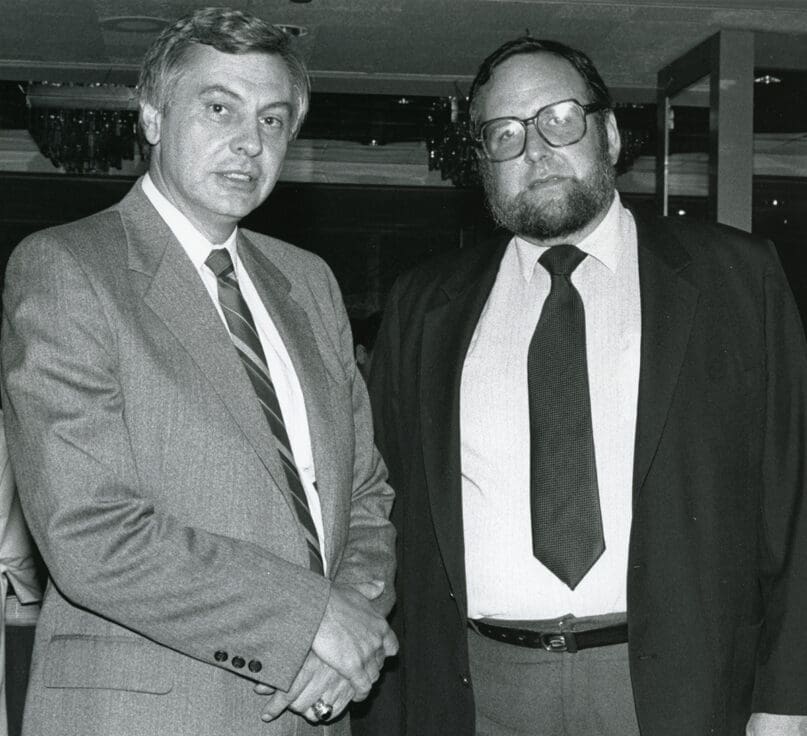
Commissioner Thomas Maul standing with Michael Goldfarb
“Many people recognize that AHRC has had an impact on those they care for and their families. But they also have had an impact on the way services were developed in this state, especially Mike Goldfarb. I have called on them many times to assist me in statewide initiatives. And the parents too, people like Jerry Weingold. We really built our field upon those voices.”
Commissioner Maul was very clear in his understanding of the mental retardation movement in New York State, assigning a central role to parents in helping to forge the way, with the state government and professionals often responding and building upon parents ideas. He also appreciated that what makes the field of developmental disabilities unique, and his state agency unique, is the relatively high degree of parental involvement. He looks to agencies like AHRC as a way to correct mistakes made by government. “You know, bureaucracies can always go astray but if you have parent involvement they are going to keep you on track.” Maul sees this as the great strength of AHRC, that it has been able to expand and become a large bureaucracy without losing the oversight and input of parents. What he feels “what makes AHRC a great agency is that despite its size it continues to focus on the individual, individualized supports and individualized programs.” He was also, however, aware of the problems that agencies like AHRC have in maintaining this high degree of parental input from the younger parents today.
I asked Commissioner Maul to be candid about his relationship with AHRC today. His response was telling. “Well, I’ll be honest with you. Not only do I trust them, but many times I will take their advice.” This remark corroborated what I had heard from many others during this project that AHRC has historically, and continues today, to be seen by OMRDD with the highest regard and looked to as a leader in the field.
When I asked Commissioner Maul about AHRC in the future he said that the agency would continue to play a major role in the expansion of services in the State, for example in the Governor’s recently announced initiative to create residential beds for those on waiting lists and in the community. Maul was clear that this will mean a considerable amount of growth in New York City and that OMRDD relies on agencies like AHRC to enable quality services to expand. In his opinion, the long history of cooperation and mutual respect between AHRC and OMRDD will undoubtedly continue for a long time to come.
Taken in tandem, the remarks of Brandt, Broderick, Ames and Maul can be seen as a kind of snapshot of AHRC taken through the eyes of important figures in New York’s human services system. Continuing with this metaphor, the snapshot appears in good focus. That is, there is considerable agreement about AHRC and what it represents as an organization in the field today. It enjoys a reputation equaled by no other agency in the state, partly because of its unique history and contribution to establishing the field. But its perceived prominence in the field is also because in its transition from small to large agency AHRC has continued to provide political leadership, been incredibly successful in entrepreneurial terms and remained faithful to the agency mission established by parents fifty years ago.
AHRC in the Twenty-First Century
While prediction is by nature an inexact science, and while many possible futures can transpire from any particular present, there are certain trends and issues that AHRC faces today and in the twenty-first century. One is a growing accountability in health care spending, Another is a shift in social welfare spending partially because of social conservatism regarding state funded supports and services.
AHRC has always been a family-governed agency. But in its early years, the family members were primarily parents. There is a current transition period in the leadership of AHRC that is basically due to the aging of the founding parents, many of whom are now in their 80’s. In more recent years there have been attempts to recompose the Board with siblings and with younger parents. The expanded concept of family and the inclusion of siblings on the Board has proven very successful. The current president of AHRC at the time of this writing, Dr. Marilyn Jaffe-Ruiz, is a sibling and the sibling committee of the Board is very active in networking with other siblings and disseminating information. The attempted recruitment of younger parents, to be discussed further below, has proven to be somewhat more problematic.
Board member and parent I. William Stone when asked about the worst-case scenario for AHRC in the future said,
“The worst case probably would be that we become a totally professional organization. That the parents and siblings don’t get involved that much, and this could be as much the fault of parents as AHRC… Parents think differently than professionals. This is my son and he is not the same as that person over there. Don’t try and fit him into a hole or square… Parents keep professionals ‘honest’… That is why AHRC is the best agency in the city.”
Judy DeIasi discussed the recruitment of younger parents as AHRC Board members.
“Why aren’t the [younger] parents joining us? This becomes the discussion constantly at Board meetings. Michael and I try to tell them this is not the 1950’s anymore.”
And of course part of the answer is the different periods in history. We live in a much more hectic and faster paced society than in the 1940s. Further, political action and the belief that we need to dedicate ourselves to “making a better world,” is much less a theme in everyday life today than after World War II. To the contrary, the experience of many who lived through post-World War II America are not at all that hopeful about a better world. They are, in fact, more concerned with maintaining the standard of living and quality of life that they have had in the past. At the time of this writing wealthy persons continue to make money at an amazing rate; yet the average working American has seen a serious erosion in his/her buying power in the last thirty years, and probably will continue to do so. This is the fiscal frame within which citizens have formed their modern apolitical conscience. At the same time the average American has lost faith, perhaps for good reason, in government and political activity during this period. In sociological terms it makes sense that people under such conditions would be less likely to participate in voluntary political action.
DeIasi explained the many reasons why it is difficult to get younger parents involved. Some of them, many of them, are impoverished and contend with the serious problems prevalent in such environments. Those who are more affluent, tend to shop around for services from the various agencies to see where they can get the best deal. They do not perceive a need to serve the agency, since so many services and supports exist. To some degree, and this was a comment made by several of the founding parents during the interview, the younger parents today take for granted all the advocacy and political lobbying that the founding parents did. The younger parents, having their child in the “Golden Years” of mental retardation, do not understand what it meant to have been in Ann Greenberg’s situation. Those of us in the field who are a bit older, and perhaps have had a chance to see and learn about the cyclic nature of history, see the lack of political participation by these parents as a serious problem to our field.
The fiscal and political climate facing the agency is also completely different than that when it was founded. It is clear that changing the world by creating institutions and public awareness, the basic idea of the founding parents, is no longer a viable strategy for agencies serving persons with mental retardation to follow. This has led to a more general strategy of opportunism and entrepreneurialism– following the directions of public policy and using these to construct systems beneficial to the basic mission of the agency- providing for a good quality of life for people with mental retardation. In this sense AHRC is still seeking resources and expanding its operational base. But the fiscal and political climate within which this is occurring is not positive for people with severe disabilities.
Goldfarb comments about fiscal issues facing the agency.
“An enormous amount of money has been spent on this field, and people are tired of it. And it has nothing to do with the state of the economy…I had this terrible fear eight or nine years ago when things started getting dicey and politicians were saying, ‘You’ve got to learn to do more with less.’ And academics were saying, ‘It’s time to move from center-based programming to natural supports,’ which is another way of saying that you have to cut your budget…I always felt when people were saying, ‘It’s because the economy is in terrible shape.’ [NB. New York City had a budget crisis in the 1980’s] that was never the real reason. And I was right. Because now we have a situation where the economy is flourishing and they are still doing it…People in this field have always had the feeling they are doing the Lord’s work and that people of conscience would provide. And the fact is they’re just doing work, and nobody will provide if you are not careful. These days missionary or evangelical zeal will get you nowhere. People with disabilities are increasingly being seen as a burden, not as an opportunity to demonstrate charity. Now the question is why are we spending as much on a three year old with cerebral palsy as we do to send someone to Harvard…(ironically), what kind of investment is that?!…There is a sense today of weariness with caring for the weak.”
The social conservatism is not only evident on the level of policy. It exists on the community level as well, as indicated by an increased resistance of Community Boards in considering proposals for new residences. The attitude is more negative than ever, with most Community Boards being unsympathetic and answering with “We already gave, go elsewhere.” This change in values about people with disabilities is not only in the United States, it is a virtual world-wide movement. In my own travels, and this is corroborated by Susan Parker, Secretary General of Rehabilitation International, there is a mean-spirited social conservatism that is rearing its ugly head in all industrialized nations.
Despite this relatively grim scenario that would seem to indicate fiscal austerity for persons with complex and life-long needs, there is still agreement in the management team that AHRC must continue to grow in size. Gundersen comments,
“I think a management maxim is, that as soon as you stop growing you go backwards. If you are growing it is always offering you ways of promoting good people and not losing them to the outside. We can always advance people in this organization. There is an esprit that builds when you are growing and when you are shrinking it turns into the obverse of that… The complexity of what a large agency is able to do is so much greater than a small agency. I mean we can put something together overnight that a small agency simply wouldn’t have the resources to do.”
For agency management the question has become how to pursue the basic goal of AHRC, to enhance the quality of life of people with mental retardation and their families, while growing in a fiscal environment unfavorable to ‘needy populations.’
In the United States fiscal conservatism has taken a political and economic form in the HMO movement. Goldfarb noted that an environment that forces agencies towards ever greater efficiency tends to weed out the smaller agencies, and favor the larger ones. While AHRC is a large agency, and while it has done relatively well in terms of aggressive fund raising and pursuing revenues, “it’s a bad environment.” Goldfarb puts it simply when he says,
“Managed care is nothing more than an expression of the unwillingness to pay lots of money for human services… based upon the decision that we pay too much damned money for health care. Now I don’t know what is too much or too little, but the premise is that we spend too much.”
While managed care through Health Maintenance Organizations has become huge business in the US, people with chronic disabling conditions have been mostly exempt from its provisions. The management team had two major concerns should this change. Speaking about managed care companies and disabilities Goldfarb said,
“If they ever get their act right and take a case management, cost-reduction approach to long-term care for the disabled, they’ll put…this industry right out of business. Because their approach will be, ‘cure them or discharge them,’ and we don’t do that… We’re involved in enriching people’s lives, enhancing their potential and maintaining their capacity to function. And that is not something that managed care systems want to pay for.”
But managed care companies are not the only threat on the horizon to agencies like AHRC. There is also currently a huge growth of private companies on a national scale that are more sophisticated than most agency providers and are moving aggressively into states by underbidding the existing providers. Goldfarb comments.
“Because of their size, because of their scope, they have the ability to market better than we do. They have the ability to be more efficient than we are. And, they are moving aggressively state-by-state and underbidding existing providers. Now, how do I underbid a national proprietary corporation? How do I go to my Board and say, ‘I’m cutting the price on this product by ten percent. I have to take half of my “overnight” [coverage] away. Agencies like ours that are driven by family values have a very hard time pricing themselves to compete in that kind of market place.”
The managed care situation and the expansion of large national proprietaries has led members of the management team to think creatively about obtaining revenues for the agency in the future. One idea that is currently being tested is operating generic services such as community health clinics, and serving the population of persons with mental retardation within these generic service programs. Funding for certain social programs such as day care for children, home health care, nursing home care, and so on has remained relatively strong when compared to that of special interest groups such as persons with disabilities. The idea of growing into social service areas that social policy seems to favor has thus become one strategy of management. Goldfarb describes getting the agency deeper into day care.
“I want to use it as a way of getting us deeper into day care; day care for kids who are disabled and who are not disabled…If we could use a social problem and public policy shift tied to new resources to provide integrated services that include disabled people, that to me is the future of the agency.”
A challenge in this kind of program development will be keeping AHRC’s focus on its original mission, to enhance the lives of people with mental retardation and their families, but if AHRC falters financially and does not continue to exist, there will be no mission to which to be faithful. But, the opportunity for expanding the agency will exist if management is able to grow in ways that follow current social and institutional changes.
A whole set of issues is posed to the agency around the extended life expectancy for people with disabilities through development of medical treatment and care. When AHRC first began in the 1940’s it was envisioned that children born with mental retardation would not survive their parents. Now it has become normal for the reverse. In addition the incidence of disability has not decreased, so we find as many persons with disabilities needing more care outside the home than ever before. There is likely to be a huge demand placed on the agency to care both for aging baby boomers who are themselves mentally retarded, as well as for the aging children of baby boomers with mental retardation who have remained at home. This coupling of epidemiologic and demographic trends will directly affect the future development of AHRC.
But growth will also occur within the traditional department structures, for example in those Departments concerned with adult services. There is general agreement that expansion in the area of adult services is going to be necessary. In the area of residential services this expansion has been managed by Gerry Maurer, who joined the agency in 1984. Maurer explained,
“Basically I was brought on to expand and manage the [residential] department. We had 107 people living in the program, just a couple of supported apartments at that time and eight or nine group homes altogether. From ’84 we’re up to 363 people, with 27 houses, 54 apartments and with 30 more beds in development, which will add about 4 more houses. So we are getting close to 400. We have roughly quadrupled the program in fourteen years and have a budget of $20-22 million annually. And we were able to do this over a period when the economy was not as good as it had been in the 1970’s.”
Maurer acknowledged that the future growth of residential services at AHRC will not resemble the previous fourteen years. Initially many of the beds were generated through close personal relationships with the state agency, and there was literally no formal process in place for allocation. That process has substantially changed. In addition, despite the recent (at the time of this writing) announcement by Governor Pataki for a five year plan of development for community services for persons with developmental disabilities, Maurer expressed that community boards today feel “that the community is saturated” and they are no longer willing to cooperate with the opening of community residences. The reasons for not cooperating have changed over the years, but the anger at the community board meetings is as bad, or even worse, than it has ever been. Maurer says that almost all community residences get approved anyway, either by the community board after a lot of education and coaxing, or by the Commissioner of OMRDD. But he is not sure how powerful community reaction to the new residential initiative might play out.
Maurer is however confident about the growth of a different part of services under his oversight, home care services.
“We did form a home care agency … a licensed home care agency a couple of years ago. We’d probably prefer to do a certified agency, which would bill Medicare and Medicaid directly but there’s moratorium on the approval of those projects. So, we’ll ease our way into the genre, to the licensed area, and provide home health aide services that will serve everyone but will focus on people with mental retardation and developmental disabilities. That’s getting us out there as a general provider of health care services, at least conceptually. It’s growing slowly but it’s … it needs a couple of years to percolate and I think it’s going to take off.”
In order to both expand and remain, at least in spirit, a gemeinschaft-like organization will present tremendous challenges to the organization. The problem of the continued infusion of family values into the organization has already been discussed in terms of the Board, but will probably in the future need to be addressed on a program level, not only ‘at the top,’ so to speak. The continued infusion of family values in AHRC will allow the management team to expand services in a way that will not result in diminution of quality of services. AHRC’s commitment is that the agency, no matter how large, will do what it must to remain true to the original mission.
Fiscal management of AHRC will be enhanced through expertise and technology.
“The size of the management will have to grow in the next ten years as we grow, and is subject to a lot of discussion. We will need to get more sophisticated in the financial area. To manage the kinds of monies that we are now managing, we are finding that our relationships with banks are getting infinitely more complex. They are more willing to lend us money, and they are getting smarter too.”
AHRC is installing new computer technology that will present the possibility of both preserving agency culture and addressing certain key agency functions such as cost containment and billing, functions that need to be upgraded as the agency continues to grow. As Board member I. William Stone put it, “With regard to computer technology, we must go into the 21st Century. We are a $100 million organization. If we don’t keep pace with technology, we are just going to lose it.”
A critical issue facing AHRC and other human service agencies in the 21st century will be maintaining high caliber direct care personnel. In almost all urban areas in the US there are increasing problems in securing and keeping a well-trained direct care workforce. Despite its relative success in this area AHRC still faces this problem. Managers at AHRC understand that the quality of life of people in their programs is directly related to the quality of the work life of their direct care personnel. The agency has thus far done an exceptional job in recruiting and maintaining a high quality direct care workforce, especially given the fiscal climate and resources within which it operates. Personnel recruitment and development will continue to present a critical area of focus for agency management in the future. Finally, in the future there will likely be an increased focus on the agency’s public and political relations. Current management has hired an external public relations firm to help enhance AHRC’s image and public visibility. These efforts will be linked to increasing public awareness of disability issues.
Conclusion
It is difficult to create a fitting end to this 50th anniversary history of AHRC. One cannot help but be impressed, even in a brief document such as this, by the incredible variety of human experience, both individually and collectively, that the phrase ‘the 50th anniversary history of AHRC’ glosses. No words can do justice to these human stories and efforts that constitute the reality of AHRC’s history– a history that spans literally from one world into another in terms of the treatment of people with mental retardation. And as these pages have indicated, AHRC itself was one of the prime motivators in this incredible reversal of policy and practice; in retrospect an almost unbelievable accomplishment.
It is said that history is driven forward by both the great forces of economics and the power of ideas. In considering the possibilities for AHRC, the economic and ideological future of America is so unsteady that it is literally impossible to predict what it will look like in one year let alone twenty or thirty. Certainly AHRC faces many fiscal and ideological challenges as it enters the twenty-first century. The society of the Golden Age of Mental Retardation, a society of their making, is a thing of the past. Yet, as this story indicates, history is always made by people and it has a way of calling forth what is required from us. One can hope, and with some reason for optimism, that the same fervor that characterized the founding of AHRC will again emerge in its future family leaders. This will be the key to AHRC remaining the kind of organization it has always been, an organization driven by family values and concerns.
But, whatever the future holds for the Association for the Help of Retarded Children, this chronicler of its story is convinced of two things. First that AHRC has always been and will continue to be a leader in the field for many years to come. And second that it will be the social conscience and personal dedication of AHRC’s program participants, parents, siblings, staff and administration that will create the substance of its future and enable the AHRC of the 21st century to “build a better world.”