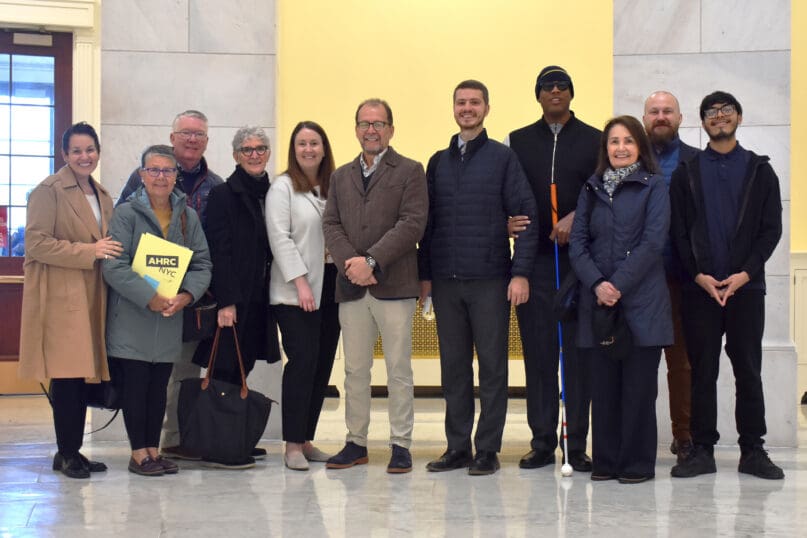
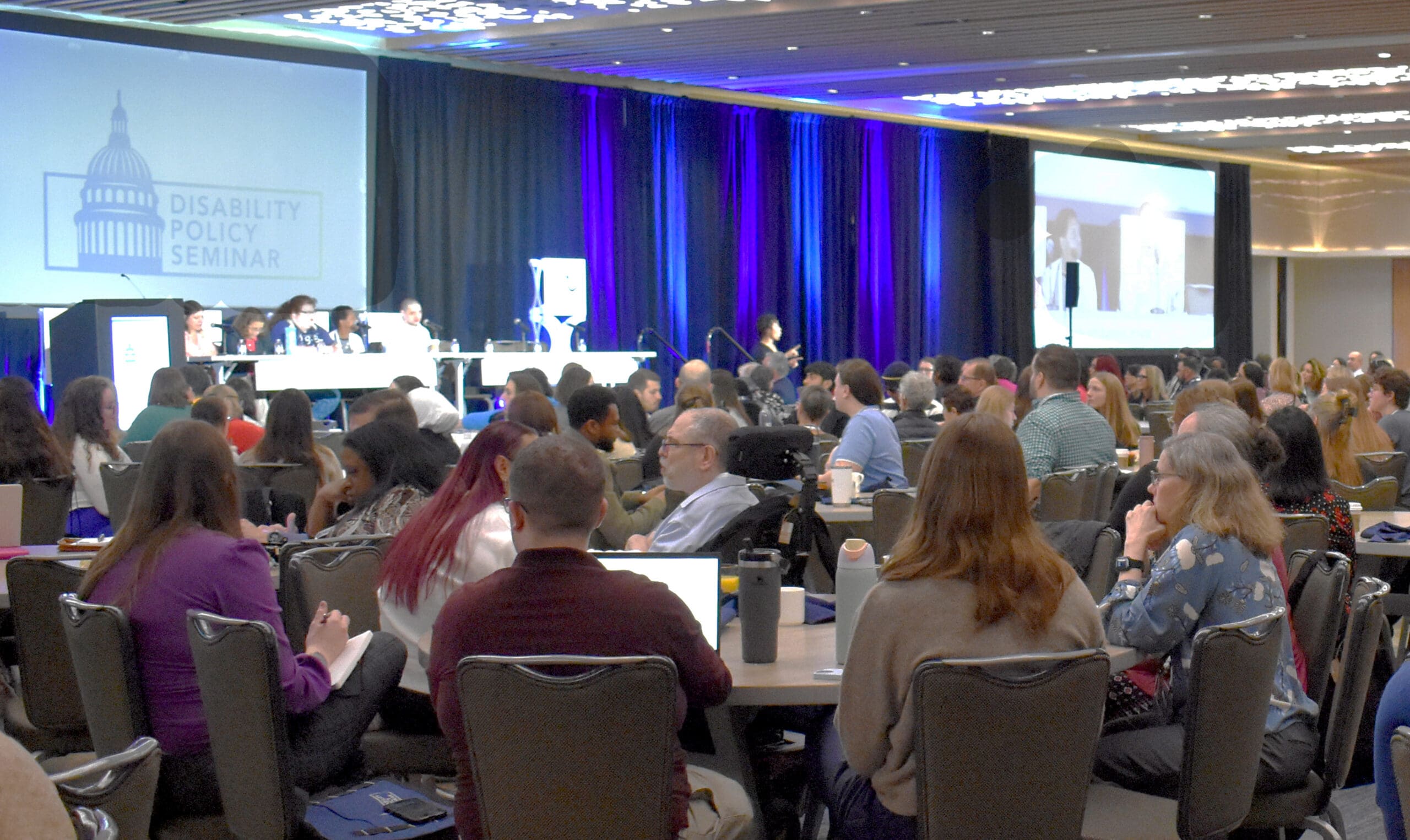
More than 900 disability rights advocates gathered at this year’s Disability Policy Seminar in Washington D.C. to discuss pressing public policy issues and meet with federal legislators on Capitol Hill. AHRC NYC and its statewide and national partners, The Arc New York and The Arc of the United States, joined with other disability-focused organizations such as American Association on Intellectual and Developmental Disabilities (AAIDD), The Autism Society (AUCD), Caring Across Generations, Disability Belongs, The National Alliance for Direct Support Professionals (NADSP), Self-Advocates Becoming Empowered, and United Cerebral Palsy, (UCP).
Medicaid, SNAP, Social Security, and Education
2025’s budget bill, passed on July 4, continues to present concerns for families and providers alike. The bill required nearly $1 trillion in cuts to Medicaid over the next ten years. Presenters stated that states have few options to fill funding gaps when the federal government cuts or withholds Medicaid funds; for many states, Medicaid is the biggest expense in their yearly budgets. The foundation of modern disability services, home and community-based services (HCBS), are optional in many state budgets; severe budget shortfalls could lead to rate cuts, capping waiver services, and ultimately people with disabilities dropping from Medicaid.
Mehmet Oz, the Administrator for the Centers of Medicare and Medicaid Services, recently sent a letter to Governor Kathy Hochul and Office of the Medicaid Inspector General with a series of questions about the program and raising concerns about the New York State Medicaid program. In the letter, Dr. Oz alleges significant fraud and abuse in the New York State Medicaid program and threatens to freeze potentially billions of dollars in federal funding. CMS has given New York State a very narrow time window to respond to the questions. This is in addition to similar letters sent to officials in Minnesota and California. Any withholding of funds would be catastrophic to service providers and the people and families they support.
Work requirements for people receiving SNAP and Medicaid pose a great threat, especially for people with disabilities who have fluctuating work hours and income. New reporting requirements place added burdens of people receiving SNAP and Medicaid, further threatening their ability to maintain these life-saving programs.
Disability organizations and self-advocates continue to call for raising asset limits for people receiving Supplemental Security Income (SSI); these limits were last changed in 1989 and have fallen far behind inflation ($2,000 for individuals, $3,000 for married couples). Cuts to customer service positions at the Social Security Administration are leading to rapid and arbitrary changes to how the agency serves the public.
Advocates are dismayed at cuts to the Department of Education, and particularly the growing disregard for IDEA, its impact on students with disabilities, and a proposal to move the DOE’s Civil Rights division to the Department of Justice. Students with disabilities are at great risk as a result of these changes in staffing and priorities.

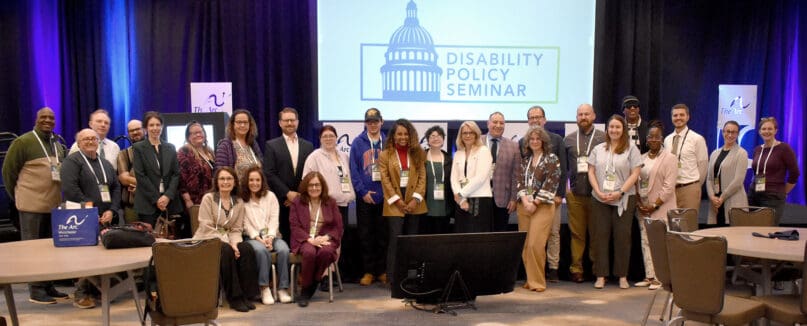
Meetings on Capitol Hill
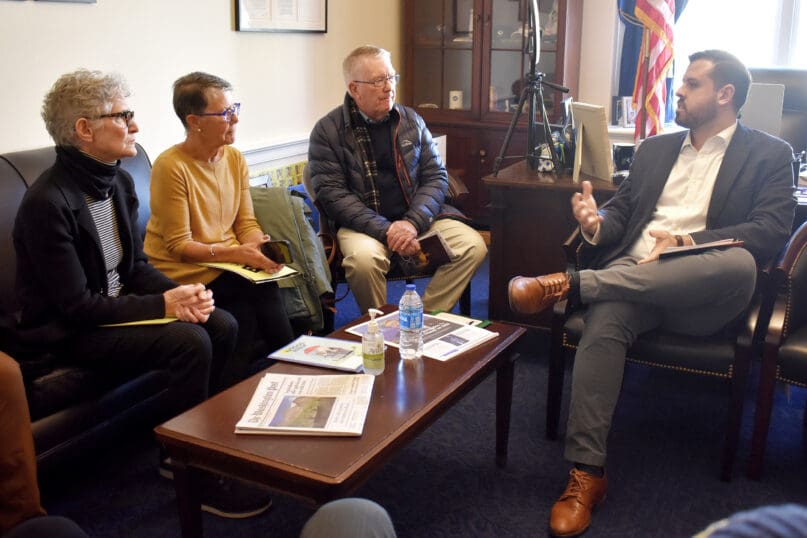
AHRC NYC met with the following lawmakers and their representatives:
- Representative Hakeem Jeffries
- Representative Dan Goldman
- Representative Nicole Malliotakis
- Representative George Latimer
- Representative Mike Lawler
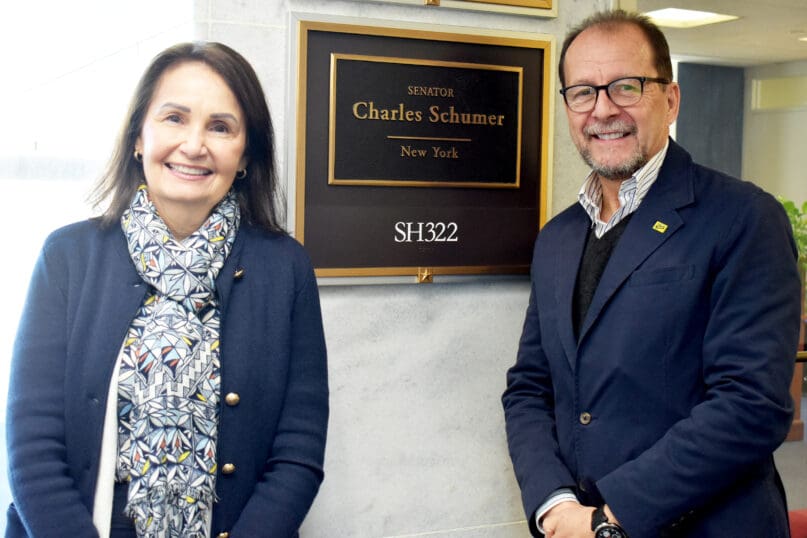
- Senator Chuck Schumer
- Senator Kirsten Gillibrand
We appreciate these legislators for taking time to meet with us and hear our concerns about Medicaid, Social Security, and disability education. Contact your federal representative today to make your voice heard, as well.