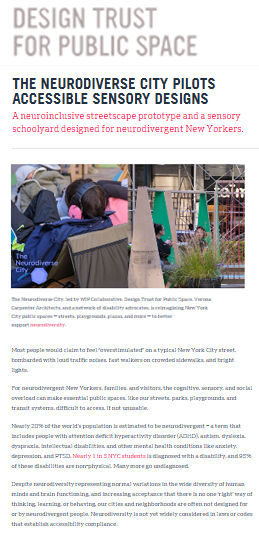
As reported by The Design Trust for Public Space the Neurodiverse City coalition has set out to learn what makes a space inaccessible, through workshops and public space sensory audits led in partnership with city agencies, NYC public schools, and disability advocates. Guided by sensory audits and design workshops in partnership with AHRC New York City and self-advocates with intellectual and developmental disabilities serving as subject matter experts, the WIP collaborative, has unveiled two pilot interventions to test what neuroinclusive design could be. One prototype is designed for city streets and plazas, while the other looks to play spaces and schoolyards. The design for city streets and plazas was installed at Louise Nevelson Plaza just across from AHRC NYC’s Headquarters.
WIP identified some key design opportunities to improve streetscapes. Participants expressed interest in being closer to trees, enjoying long views, engaging with tactile elements, and experiencing semi-sheltered spaces.
Installed at Louise Nevelson Plaza in September, a DOT-operated pedestrian plaza in Lower Manhattan, the street prototype features touchable plants, nature soundscapes, and architectural elements fabricated by Thirdkind Studio from birch plywood with recycled rubber surface applications and nylon rope attachments, inviting passerbys to touch, sit, lean, lay down, or climb on the pieces.