Chapter 1
A Short History of the Treatment of Persons with Mental Retardation
“The subject of history is the life of peoples and humanity. To catch and pin down in words – that is to describe directly the life, not only of humanity but of a single people, appears to be impossible.”
– Leo Tolstoy, War and Peace
The purpose of this chapter is not to try and capture the history of people with mental retardation in any sense. It is, instead, a way to set the historical stage for the post World War II growth in the United States of the associations of parents who had children with retardation. With this in mind, the early history of persons with mental retardation will be mentioned briefly. In later sections the modern history will be detailed, especially the post-World War II era when AHRC was organized.
Early Treatment
Although the construct of mental retardation is a relatively new one, there have of course been persons with this condition from antiquity.
And, while our historical understanding of these persons treatment is quite limited by lack of evidence, it is known that people with handicapping conditions occupied the following kinds of ‘deviant’ statuses in European and American societies: object of dread, object of ridicule, changeling, evil/possessed person, sub-human organism, diseased organism, eternal child, and holy innocent (see Wolfensberger, 1972).
While the dominant status in contemporary society was, and remains to some degree, that of diseased organism (the so-called “medical model”), all of the above ways of perceiving persons with mental retardation still exist in various degrees in contemporary society, and continue to influence our treatment of these people and their families. They are ‘historical ghosts’ that still inhabit our thinking and behaviors even though we scarcely understand them or their origin.
The Institutional Care System
The particular history of mental retardation in the United States (called “feeble-mindedness” and “mental deficiency” in the 19th and 20th centuries) has been told eloquently in several sources, including Trent‘s recent (1994) award-winning account.
It is generally understood that scientific concern for the care of people with mental retardation resulted from the efforts of the French Encyclopedists of the 18th century in whose work concern for the welfare of various oppressed peoples was primary. The first work with mental deficients was attempted at the end of the 18th century in institutions such as the Bicetre or National Institute for the Deaf and Dumb in Paris.
In fact, it was at the latter Institute that Jean-Marc Itard met Victoire of Aveyron, the so-called “Wild Boy of Aveyron,” and began what is regarded as the first documented case of special education. It also turns out that Itard’s best student was Edouard Seguin. Both these men shared the belief that much of the intellectual functioning of persons with mental deficiency was not innately limited but could be developed by training. Seguin opened a school for mental deficients in France in 1848, but fled the country after the Revolution of that same year, emigrating to the United States where he remained active and profoundly influenced the care of ‘mental defectives,’ advancing his philosophy of care known as “moral treatment.“
In the United States Samuel Gridley Howe had been an early experimenter in the care of children with mental retardation, actually training blind children with this condition since 1838. With his help a special experimental school had been begun by the Perkins School in 1848. But the first legislation to establish special schools for people who were mentally defective was enacted in New York in a Bill sponsored by Senator Frederick Backus in 1848, enacted in 1851. This led to the creation of the New York State Asylum in 1851, headed by Henry Wilbur. The site where this Asylum was established became eventually known as the Syracuse State School, and today the Syracuse Developmental Disabilities Services Office.
In 1876 the directors of institutions for the feeble-minded, as they were also referred to in this era, formed a national professional society, the Association of Medical Officers of American Institutions for Idiots and Feeble-Minded Persons, which eventually became the American Association on Mental Deficiency, and today the American Association on Mental Retardation. This Association largely determined the medical and rehabilitative treatment of persons with these conditions for the next hundred years, and continues to be influential today. What they originally wanted was to establish institutions for those who were not so severely handicapped that they were unable to live in their community. That is, they wanted to be able to train the students and discharge them once they had learned what it was that was necessary to live in the community.
Howe makes this kind of philosophy clear as early as 1848, although this is not how things actually worked out. For example, at the Syracuse Asylum only “boys and girls of the higher grades” (what was eventually called “educables”) were admitted. But, the results of their education were not encouraging. In addition, there were few or no community resources for parents with these children and as Lerner (1972:23) wrote, “Parents of children who had reached the age designated for release to the community pressured the schools to keep their children. In addition, there were appeals for admissions of new cases of all ages and with all types and levels of mental defects.” The role and size of institutions expanded well beyond what had been considered desirable by their founders earlier in the century. In New York towards the close of the 19th century we had in addition to the Syracuse Asylum, a branch of the Syracuse Asylum opened in Newark (New Jersey but serving metropolitan New York), a hospital and school on Randall’s Island in New York City, and Rome State Custodial Asylum. These places were basically the options available to parents during this period of history. While there were some small private schools, and a tradition of teachers of special children who boarded a small number of them in their homes, these were expensive and essentially unavailable to any but the relatively wealthy.
Initially ‘institutions,’ ‘schools,’ or ‘colonies,’ as they were originally called, operating under a philosophy of treatment and training, attempted to provide relatively normal living conditions, educate residents, and provide opportunities for them to work on grounds if they were not released. These places were not simply dumping grounds that we associate with institutions in the 20th century. But over time their character changed for the worse. There were several reasons for this including the invention of the philosophy of eugenics in the latter part of the 19th century. This philosophy combined the religious tradition of degenerationism (that people with disabilities were marks of evil and sin) with the sciences of genetics and evolution. What emerged was a kind of social Darwinism that saw the evils of society as genetically based. Mental deficiency, criminality and delinquency, prostitution, and alcoholism were seen to result from the defective genes of the individuals. This led to a movement of sterilization of mentally defective persons, especially women, that was strongly advocated by medicine and government (for example, Oliver Wendell Holmes was a strong advocate of sterilization). Indeed, sterilization was presented to the public as a humane way to address these social problems.
This is especially true considering that the other part of the eugenics program was a euthanasia movement advocating the killing of mentally defective babies and children. In Germany, euthanasia became official medical policy sometime around 1920, and was openly taught and practiced in medical establishments of all types (see especially Friedlander, 1996; Wolfensberger, 1981). But in the United States, while euthanasia never became official medical policy, it was practiced and openly advocated. Martin Pernick’s 1996 book The Black Stork describes the Baby Bollinger case of 1915 and the efforts of Dr. Harry Haiselden, including the making of a feature length film “The Black Stork,” to institute the medical practice of euthanizing children with disabilities. The euthanasia movement in the United States was not a lunatic fringe movement. It was well-publicized in newspapers and media, and strongly promoted by professionals. This can be better appreciated when one considers that during World War II, the American Psychiatric Association published a lead editorial of their journal that endorsed the legal euthanasia of mentally retarded children and the provision of psychotherapy to parents to relieve them of their guilt (Wolfensberger, 1981).
These attitudes in medicine and other scientific disciplines strongly influenced the treatment of persons with these conditions throughout the 20th century, and as the reader can appreciate from the date of the American Psychiatric Association editorial, were still very influential around the time that many of the founding parents of AHRC had their children. But the immediate effect of these ideas was to transform the nature of institutional care. In New York the institutions that had been built to train, habilitate and release persons became places where they went to live forever. Those who were ‘genetic’ types and who had severe forms of disabilities were seen as completely custodial and efforts to train them were largely abandoned. Those in institutions who were high functioning and were trainable did receive training but largely to occupy roles of institutional peonage, that is, to work on the institution grounds as free labor. Few actually were released to the community.
All these changes occurred under the supervision and surveillance of government and professionals. A State Commission for the Feeble-Minded that had been formed in 1918 to oversee institutions in New York State became in 1919 under State law the State Commission for Mental Defectives. Finally, in 1927 the Commission became part of the State Department of Mental Hygiene, the Department that controlled institutions through the 1970’s. Under the Department of Mental Hygiene institutions in New York expanded in number and in census. In 1907 Letchworth Village was established in Thiels, New York. In 1930, the Wassaic School was opened. At the same time Randalls Island was closed in 1935, and the Willowbrook State School, scheduled to open in early 1942 was taken over by the Department of the Army and converted to Halloran Veterans Hospital.
To complicate matters further, with the Depression in the 1930’s and the War in the 1940’s, fiscal resources dried up and institutions had fewer staff who were less trained.
They also were beginning to get very crowded. Children below the age of five could not by law be placed in institutions at this time, but the group of children under age 10 had been steadily growing since the 1930’s, partially at least, as a result of medical recommendations to remove the idiot child from the family for the family’s mental hygiene. By 1943, 32% of beds in institutions were filled by children aged 5 to 10 years. By 1945, the five state schools housed 15,631 patients even though the planned census had been for 11,713. The Schools became very overcrowded, Letchworth Village reported to be 20-30% overcrowded, with 200 children sleeping in living rooms and on mattresses on the floors. Partially in response to these conditions, the State government set up a Commission to examine problems of mentally ill, delinquent and mentally defective children. It cited under staffing in institutions, the inability to get children in institutions, and the failure to provide non-institutional care as the primary issues facing this population at the time. The Commission proposed legislation that was supported by the New York Times and Liberal Party in New York State. However Governor Dewey proposed alternative legislation involving delinquency issues, with which the country was preoccupied after the War, and the issues of retardation were again pushed into the background.
It was in 1945 that State Schools began admitting children under five years of age. This was seen at the time as progress and help to parents of severely disabled children. The then Commissioner of the Department of Mental Hygiene, Dr. Frederick MacCurdy, announced that as soon as the facilities at Willowbrook State School were available, limited numbers of infants could begin to be admitted. However, the Department of Mental Hygiene failed to anticipate the reluctance of the Veteran’s Administration to give up the facility. Indeed the Governor wrote letters to the Army complaining of the crowded conditions that existed in the State Schools and lack of placements for infants, for whom the State had a waiting list in 1946 of 800-900 (although he did understand the priority given to veterans and mentions that the enemy would have liquidated retarded children and adults). The Governor’s letter to Omar Bradley also evidenced a concern with the parents of retarded children, many of whom were themselves veterans. The outcome of this confrontation was that the Army agreed to leave the facility, planning to do so in 1948 but making space available to the Department of Mental Hygiene the next year, 1947. It appears that residents did begin to arrive at the end of the 1940’s (some I have interviewed recall the uniforms of the doctors and nurses who were there when they arrived). But it was not until the early 1950’s that Willowbrook was actually used to alleviate the crowded conditions at the other State Schools.
At exactly the time when AHRC was being formed, Edith Stern, a reporter of that era who did several articles on the topic of children with disabilities, published an article in the August, 1948 edition of Women’s Home Companion entitled “Take Them Off the Human Scrap Heap.” Numerous descriptions were offered of deplorable conditions similar to those made famous by Geraldo Rivera in his exposé of Willowbrook State School some twenty-five years later. Articles about these conditions and the resulting incidents of death or ill-fated escapes appeared in the newspapers and were known to the public who for the most part remained indifferent. Sterilization had become a routine and expected part of placement for women.
Such was the effect of expert knowledge on the treatment of persons with mental deficiency in institutions during the first part of this century.
The Educational System
A slightly different story needs to be told about the public education system and this population. Interestingly, special classes for children with mental deficiency had been established in some states as early as 1870 and in New York by 1902.
The development of special classes was spurred on by the new profession of psychology, particularly by the work of Alfred Binet and Theodore Simon who constructed a method to test intelligence. This method was brought into the United States and refined by such persons as Dr. D. L. Terman who constructed the Stanford Scale and Dr. Henry Goddard who authored the Vineland Scale. Such tests were widely accepted in the United States and were employed in the school systems. Their application revealed a new class of mentally deficient child, the so-called moron, who were children that were later called “high grades, “borderlines” or “educables” and for whom there had been previously no educational programs. There were large numbers of these children, who had previously been called “laggards” and were seen as burdens to the educational setting. The new tests showed that these children had subnormal I.Q.s and that they lacked the capacity to participate in regular classes. Thus the special classes begun in school systems across America during the end of the 19th and beginning of the 20th century were for such children.
The attitudes of society for these less afflicted individuals appears to have been considerably kinder than for their more handicapped counterparts. By 1917 New York had passed laws mandating classes for those educationally eligible. (Parents with children not meeting educational qualifications could keep their children at home until they were eligible for residential placement at a state school or training center). In New York City considerable progress had been made by 1921 in opening classes for educables, some 258 existed with an enrollment of 4,896 students. While this fell considerably short of the need, estimated to be 1000 classes to serve all the children thought to be eligible under the laws provisions, it is clear that early in the century some progress was being made in opening up the educational system in New York City to people with ‘mild mental retardation.’
Progress slowed for many reasons, including monetary since the depression and World War II also had fiscal effects on social services other than institutions. There was a severe shortage of trained teachers, and educators were not quick to understand the educational requirements of special classes. Despite these and other problems, special classes in the New York City School system, under the aegis of the Bureau for Children with Retarded Mental Development (BCRMD), increased steadily over time. By 1946, in the years just preceding AHRC’s founding, there were 669 special classes with 11,938 students, in accordance with the requirements of State law that classes be provided for students between the ages of 5 and 12, with I.Q.s between 50-75. Most of the classes in the State were in New York City.
Even with the growth of special classes in New York City, the need far outweighed the available services and many children with moderate mental retardation remained in regular classes or did not attend school. Those in regular classes were not “included” in today’s sense of the term. Instead, at this time they were described as “trapped” in regular classes in which they tended not to have their educational or social needs met. Further, literally nothing had been done in New York to meet the needs of children who fell below the educational standards set by State law. No public educational services were available for this population.
There were some private schools that did provide education for children with more complex educational and developmental needs. The Parkside School in Brooklyn, the Seguin School in Newark, and the Kolburn School in Connecticut were such examples. And there were also individual teachers who would board children in their homes and teach them. These arrangements, however, were quite expensive and essentially unavailable to the average family. Just before Ann Greenberg founded AHRC she had sent her son Jerry to the Kolburn School. In order to do so, the Greenbergs had decided that Ann would go back to work full-time, in order to pay for Jerry’s schooling.
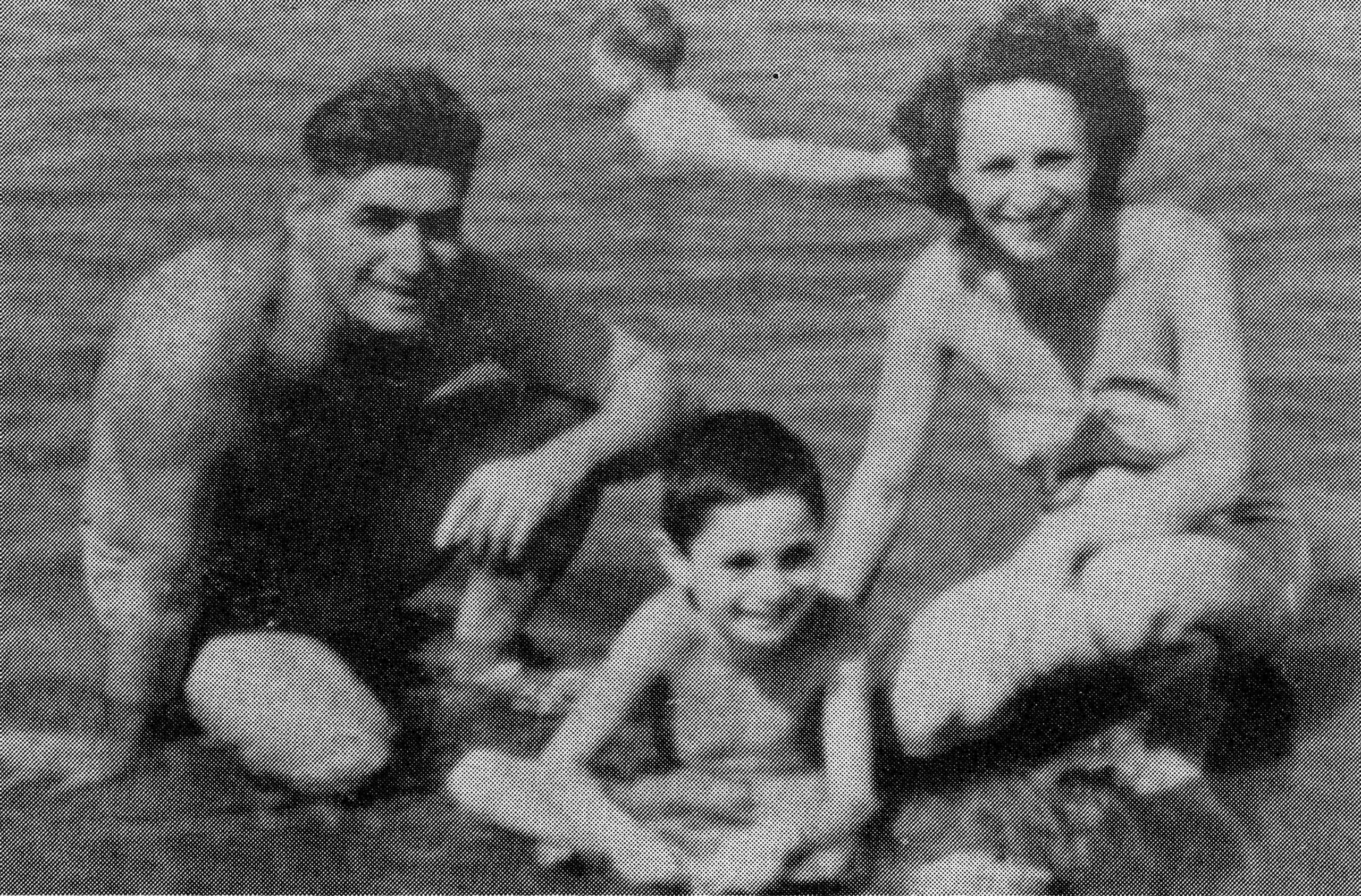
So this was the situation that parents of children with mental retardation faced in 14 New York City at the end of the 1940’s. Institutions were overcrowded, classes for the children considered educable were inadequate in number, no education (outside of State School) existed for children who were not eligible for CRMD classes, and there were also almost no services, other than State School placement, for persons with retardation after they turned sixteen. The immediate post-war years did not see any substantial improvements in the care of retarded children.
Both the parents and professionals acknowledged the lack of services and supports for this population. Professionals such as Dr. Lloyd Yepsen, the President of the only professional organization, AAMD, and George S. Stevenson, medical director of the National Committee on Mental Hygiene, were clear about their condemnation of lack of services both institutionally and in the community. A famous psychologist of that era who was to play a role in the founding of AHRC, Dr. Helen Thompson of the Pre-School Development Clinic in New York City, was outspoken about the lack of services for those parents who wanted to keep their children at home. These and other professionals were part of the stirrings of a new social consciousness about the treatment of persons with mental retardation. They saw the field of mental retardation as being at a very low point, suffering from scientific pessimism and neglect (the dominant psychiatric view that mental retardation was permanent and incurable), lack of trained personnel and facilities, isolation from other human services, and a reputation of “hopelessness.”
Under these historical conditions parents began to develop a new sensitivity to their children’s situation, and a commitment to change it.
The Formation of Early Parent Groups in the United States
The final topic I will cover in setting the historical stage for the development of AHRC is its relationship to other parent groups that preceded it. While it is well-documented that AHRC was a leader in the parent movement, it was not the first parent group to form around the interests of their children with mental retardation. As Elizabeth Boggs said in an interview in 1972, generally the first groups recognized for such efforts are groups associated with children in particular institutions. The Council for Retarded Children in Cayuga County in Ohio formed in 1932, the Children’s Benevolent League, who’s motto was “Health, Happiness and Security of Handicapped Children,” soon followed in 1934 in the state of Washington, and in New York State the Welfare League for Retarded Children was begun in 1939. The Welfare League consisted of parents of children and adults who resided at Letchworth Village. The group was concerned with providing their children with gifts, recreational programs, and better facilities. The Welfare League, at least during the 1940’s, is portrayed in several sources as a small group that was basically apolitical. While this was to change in the 1950’s, The League, before and during the formative years of AHRC, was not a political force in the state for children with mental retardation.
The same year as AHRC was incorporated, the Benevolent Society for Retarded Children was formed to help children who had been placed in Willowbrook State School.
Three years following this the Sunshine League for Retarded Children came into existence around the interests of children in Wassaic State School. The institution-based parent groups did not have a statewide organization and did not become a political force in the state until after AHRC was formed and began intensive political and public awareness efforts. In response the institutional-based parent groups then formed the Council for Retarded Children and the relationship between the community-based groups and institutional-based ones was very uneasy throughout the 1950’s until they resolved their differences.
The important thing for the reader to take away from this discussion of parent groups before AHRC is that none, including those in other states, were interested in community-based services for children with retardation. Furthermore, none articulated or advocated for a general approach to the problem of mental retardation on a political level. This left the actual decision-making power in the field entirely in the hands of a small group of professionals, and without pressure from parents, they showed little interest in expanding services for this population. Mental health professionals, educators and institution directors were ineffective in dealing with the issues facing most families with a child with retardation.